Showing posts with label Gary McHale. Show all posts

Sunday, 2 February 2014

A Review of Some Aspects of the Blog "Six Nations (Haudenosaunee) & The Haldimand Tract: Beliefs Versus Facts"

Disclaimer: My references to the writings of other people--both native and non-native--do not in any way imply that they share my views on this matter.  The opinions expressed here are my own, and do not necessarily reflect those of my family, friends or associates.

Background Information Regarding Deyo and His Blog

On October 31, 2013, a resident of Haldimand County in Southwestern Ontario, Canada, started a blog entitled "Six Nations (Haudenosaunee) & the Haldimand Tract: Beliefs Versus Facts" (deyoyonwatheh.blogspot.ca).

I recently became aware of his blog through some online searching, and have read all of his (as of this writing) 80 posts.  He signs each of his entries with "DeYo," so that is what I will call him.  When I quote from or reference his posts, I will put in a notation at the end that will include a key word or words from the post title, the date of the post and the post number in sequence from 1 to 80.  (The post numbers are not included on the blog itself; I have just added them in for my own reference.)

DeYo's "kinship connections include, among others, the people of Haldimand County, the Delaware of Smoothtown, and the Lower Mohawk of the old Mohawk Village and Tyendinaga."  (Although he has aboriginal ancestry, he does not live in an aboriginal community in Haldimand County.)

From his early life onward, he has been aware of "unresolved land disputes" between the Six Nations (Haudenosaunee) and the Canadian federal government (as successors to the British Crown).  He "tended to focus on what the evidence would clearly show to be true" ("Genesis," October 31, 2013, #1).

For more than 30 years, he has examined not only "specific relevant documents" related to the Six Nations (SN) land claims, but also "related records, and the diaries and letters of Indian Department officials. . ." ("Surrenders. . .1841-1850," November 8, 2013, #30).

His research into the SN claims primarily took place over a 20-year period "between the mid 1970s and mid 1990s."  He reviewed records at Library and Archives Canada, the Archives of Ontario, The Library of the Woodland Cultural Centre, the Brant County Library, and the Haldimand County Museum and Archives.  In addition, he has scrutinized the 29 claims listed on the SN Lands and Resources website ("Examination. . .29 claims," December 21, 2013, #57).

Some of the Main Reasons Why DeYo Started His Blog

1.   The Caledonia, Ontario crisis, which started on February 28, 2006.  He says SN has no legal right to be claiming the land at the "south end of Caledonia," and he has the historical documentation to prove it.  He notes that "2006. . .was to see my world and that of those around me change forever. . .among other things, I realized there was a huge psychological gap between many of the Six Nations residents and the 'townsfolk' in for example nearby Hagersville, Caledonia and Brantford."

2.   Fallout from the Ipperwash "incident."  He observes that because of this "incident," the Ontario Provincial Police [OPP] "went from elite to effete, and their leadership became enablers. . .the rule of law vanished as the area degenerated into anarchy."  He suggests if people want to learn more about the suffering of the local non-aboriginal residents that they read Christie Blatchford's Helpless: Caledonia's Nightmare of Fear and Anarchy, and How the Law Failed All of Us (2010). 

3.   Blockade of Highway 6, by some SN protesters, October 17, 2013.  DeYo got stuck in this blockade, and it became one of two triggers that led to the creation of his blog.

4.   McKenzie Meadows Project article in "local Native paper," October 30, 2013.  After he read this article, he feared the "whole problem (questionable land claims and fallout) would never go away," so this became his second trigger ("Genesis," October 31, 2013, #1).

DeYo and Gary McHale: Six Nations are Not Indigenous to the Haldimand Tract 

The conclusion DeYo has come to is that many of SN's 29 claims are based on "unsupported, unvalidated and patently false" information.  Two key documents that he says prove his assertion are a 2009 report prepared for the City of Brantford (the "Holmes report"), and a ent," December 24, 2013, #64; "False," January 18, 2014, #77).

DeYo is not implying in any way that claims put forward by other Canadian aboriginals are lacking in merit; that is beyond the scope of his research.  He says there are problems with the SN claims because the SN are not indigenous to the Haldimand Tract.  He explains how the Crown purchased the land the Six Nations are currently on from the Mississauga:
The Five Nations did exterminate the Huron/Wyandot, Petun, Attiwandaronk, Erie and other peoples of Southwestern Ontario. . .in the mid 1600s.  Thus they removed by conquest all of the former occupants of Southwestern Ontario, leaving it a human desert for a number of years.  However, Mississauga (Ojibway/Chippewa) peoples soon began to move into the area and establish settlements or at least territorial rights. . .By 1696, the Three Fires Confederation had destroyed all but three settlements of the First Nations and they had no presence at all there by 1700.  The Three Fires Confederacy was composed of the Mississauga, Ojibway and Pottawatomi. . .In the end, the land was left to the Mississauga who were the acknowledged "owners" of Southwestern Ontario, and from whom Governor General Sir Frederick Haldimand purchased the Haldimand Tract for Six Nations occupancy in 1784.
Hence when the Nanfan Treaty of 1701 was signed by 20 representatives of the Five Nations (the Sixth Nation, the Tuscarora, were not incorporated until about 1714), they were yielding their "beaver hunting grounds" in Southwestern Ontario to the British - however, they had no claim to Southwestern Ontario because they had been totally defeated by the Mississauga and their allies ("Treaty," January 17, 2014, #75).
He explains that the Six Nations:
. . .were dispossessed Loyalist refugees looking for a suitable place to settle.  When Captain Joseph Brant chose the Grand River lands, it was necessary for the Crown to purchase the lands from the rightful owners - the Mississauga.  It was widely known that the only claimants to these lands at that time were the Mississauga. . .

. . .When Governor Haldimand was faced with the task of accommodating the thousands of Six Nations and other Native peoples who had fought for the Crown, and whose aboriginal properties in NY had been utterly destroyed by the depredations of the American General Sullivan, he obtained a deed of sale from the Mississauga who owned the entire region by right of conquest dating to the closing years of the 1600s. . .

. . .The Six Nations are aboriginal to the area between the mouth of the Mohawk River to the Finger Lakes and beyond towards Lake Erie.  However, these lands do not belong to the Crown any longer, and so the Six Nations are no more aboriginal to the Haldimand Tract than their fellow Loyalists and military comrades. . .("Six Nations are NOT Aboriginal," November 2, 2013, #6).
Caledonia activist, Gary McHale, covers some of the same ground as DeYo in his book Victory in the No-Go Zone: Winning the Fight Against Two-Tier Policing (2013; 186-187).  For instance, he says ". . .despite the impression given by the OPP, government and media, Six Nations are not First Nations.  They have no signed treaties with the Canadian government, and no basis under which to make a property claim" (187).

Thomas King's Questionable Comments on the Caledonia Crisis in The Inconvenient Indian

The information provided by DeYo, McHale and Blatchford makes me question even more some statements made by Cherokee/Greek author, Thomas King, in his book The Inconvenient Indian (2012).  King describes Blatchford's Helpless as a "sloughing off of history. . .style of scholarship."  He also contends that the Canadian and Ontario governments have "ignored and dismissed. . .the long-standing native land claims dating back to the 1700s," and implies this contributed to the Caledonia crisis (165-166).

In addition, King takes aim at the Ontario government for settling a $20 million lawsuit with some non-aboriginal Caledonia residents in 2011.  He implies this compensation may have been politically motivated, since a provincial Liberal election occurred a few months after the settlement.  There is ample justification for concluding that it was indeed politically motivated.  But I am shocked that he then claims this settlement shows that "[t]he concerns of the Mohawk and the land claim itself were shoved into a closet. . ." (175-176).

It seems to me that, since historical evidence demonstrates that SN have no right to be claiming certain areas, including land at the south end of Caledonia, then Ottawa and the Ontario government would be in a difficult position to resolve the matter.  It also seems to me that, if anything, the Ontario government, in particular, has gone overboard to appease SN regarding certain claims.

Conclusions

DeYo summarizes his concerns as follows:
To expect meaningful change to happen without resistance is unrealistic.  What I do hope is that those with the power to act, will show some respect for the data and the facts - and respond accordingly with some backbone.  My greatest trust is in the Courts.  It is here where we can find true justice in Ontario, free of the taint of politics ("Recent," December 24, 2013, #64).
If DeYo is wrong in his assertions, then the parties in question need to provide the necessary data to prove this is the case.

Afterthoughts

I agree with many of the statements DeYo makes in his 80 blog posts, but I feel he sometimes generalizes too much.  I believe this is because most of his interactions with aboriginals have involved Six Nations, and have ended up being negative.

I have also had some negative interactions with aboriginals, as explained in some of my previous posts on this blog.  However, I have also had some positive experiences, and am optimistic that things are getting better in certain areas.

For instance, I have been heartened by many of the aboriginal success stories that have been presented on the Sun News Network by commentators such as Ezra Levant.  Although Levant is one of the aboriginal communities' biggest critics (and has a tendency to exaggerate), I hope he continues to provide coverage of when aboriginals do well. 

A growing number of native reserves thrive as collectives because they have shaken off the cloak of dependency on government funding, have taken personal responsibility for their actions, and have moved forward with viable and self-sustaining action plans.

As I explained in my "Canadian Aboriginal Integration. . ." post, "I remain firmly on the side of those aboriginals who agree that maintaining their Canadian citizenship is a good thing."  I do not have a problem with aboriginal rights that have resulted from Canadian Constitutional provisions, as long as these rights do not harm aboriginals or non-aboriginals, e.g., traditional practices among some tribes that condoned violence and disparaged women.  I favour an aboriginal governance model that allows for integration with the Canadian government system.  In other words, I do not agree with natives creating separate nation states outside of the Canadian Constitution.

(In addition, I totally support those aboriginals who do not want to remain as part of collectives on reserves or in urban areas, and who wish to become part of mainstream Canada.  There are thousands who have chosen this route.)

I believe the Six Nations are lagging behind other communities in terms of effective governance because of their complex history and community dynamics.  As DeYo has pointed out, and as I have read elsewhere, there are some Six Nations members who realize the reserve situation could use some improvement.  For those who feel this way, I highly recommend Tsimshian author/entrepreneur/lawyer, Calvin Helin's, The Empowerment Mindset (2012).  The sub-section of Chapter 2, entitled "Community- and Group-Conditioned Negativity" (38-41), is particularly relevant.

Monday, 21 May 2012

Caledonia and Six Nations: Majority Opposed April 28, 2012 "Parade"

The Grand River land dispute includes 40 hectares in Caledonia.  Caledonia is located in Haldimand County, in Southern Ontario.  Henco Industries originally planned to build a residential subdivision, to be called Douglas Creek Estates (DCE), on this land.  But some aboriginals at the Six Nations reserve claimed that this land was never surrendered and started an occupation there on February 28, 2006; the occupation continues to this day.  The federal government maintains that the land was properly surrendered in 1841, and sold in 1844.  The Six Nations elected council agrees with the government's contention, but maintains there should be "fair compensation."  However, the Haudenosaunee Confederacy (traditional) Council asserts that the signatories to the sale were deceived (Blatchford, p. 27).  Toby Barrett, the Haldimand-Norfolk Conservative MPP, stated in a February 29, 2012 news release that "there are a number of valid land claims along the Haldimand tract area but not on Douglas Creek Estates."  On the sixth anniversary of the standoff, Barrett announced that Haldimand County had lost 650 residents partly because of the "dismal economic conditions locally and the erosion of justice, rule of law and democractic process" that have resulted from the occupation of the former DCE.
Many of the best recommendations for improving the aboriginal situation originate with natives who recognize that changing things for the better is a two-way street.  They acknowledge that all the blame for native woes cannot be placed on non-natives' shoulders.  Tsimshian lawyer and entrepreneur, Calvin Helin's, book Dances With Dependency (2006) is filled with numerous insights that I share.  Cree Don Sandberg wrote lots of excellent articles for his former employer, the Frontier Centre for Public Policy, and continues to write ground-breaking pieces for media outlets like the Winnipeg Free Press and National Post.  Helen Miller, a Six Nations elected band councilor, has had a couple of her powerful letters published in the Brantford Expositor and Turtle Island News.

But I also believe that non-aboriginals have a role to play in recommending solutions.  In my case, I am speaking from two generations of experience dating back to the late 1950s, and as someone who worked in aboriginal organizations in different parts of Canada for about 12 years.  And Sandberg believes people like me should speak out.  In a January 2, 2011 National Post article, he was asked his opinion as to what should be done about aboriginal accountability problems.  He responded with "[t]he strongest voice aboriginal reformers have is the non-aboriginal taxpaying public, who can let their elected officials know something has got to be done.  Because we know the government itself does not listen to grassroots native people."

Fortunately, at Caledonia and Six Nations, many aboriginals and non-aboriginals found common ground in their opposition to an outrageous April 28, 2012 "parade" through Caledonia, orchestrated by a group of mostly non-natives from other parts of Southern Ontario.  One of the parade organizers was Tom Keefer who has been involved with the DCE protests since April 20, 2006.  Caledonia activist Mark Vandermaas described Keefer and his allies as a "gang of anarchists, Marxists, radical unionists, and anti-Israel groups who have been supporting the lawlessness in Caledonia since nearly the beginning."  

http://voiceofcanada.wordpress.com/2012/04/27/dear-caledonia-residents-about-tom-keefer-tomorrows-takeover-of-caledonias-streets/

A media release issued by the march organizers said that participation included representatives from Six Nations as well as non-natives from eight Southern Ontario cities, and that as many as 1,000 could be expected (Day, Dunnville, April 18, 2012; Gamble, Brantford April 27, 2012).

Although local and regional news outlets in the Caledonia area paid considerable attention to the discussions before, during and after the march, it received virtually no coverage outside of those areas.  But I think it is important to draw attention to it because it is a very encouraging development.

I first learned about the march through some correspondence I received from Canadian Advocates for Charter Equality (CANACE) Executive Director Gary McHale and Caledonia Victims Project Founder Mark Vandermaas.  Both activists said their groups would not be present at the march because they did not believe in interfering with events initiated by natives.  However, McHale and Vandermaas did organize a protest the week before, on April 21, at which Vandermaas and another Caledonia activist Jeff Parkinson were arrested.  You can read about their unwarranted detainments at the following links:

http://caledoniawakeupcall.wordpress.com/2012/04/24/video-two-arrested-for-race-in-caledonia/

http://voiceofcanada.wordpress.com/2012/04/27/vandermaas-email-to-opp-officer-re-april-21-dce-rally-before-two-breach-of-peace-arrests/

Haldimand County Mayor Ken Hewitt made it clear he did not agree with the April 28 "parade" in his April 3, 2012 article in the Sachem.  He said "[f]or most of us who live here, we need not be reminded of the time that has elapsed when assessing the absolute abysmal failure of government.  We do not need people coming from other regions to parade through our community in order to satisfy their personal agenda."

Dr. David K. Faux, a Caledonia resident whose maternal ancestry includes a Six Nations Mohawk clan mother, also raised concerns about the march.  In his April 10, 2012 letter to the Sachem, he said that the '''parade' is a euphemism for 'protest march.'"  He went on to say that the "'parade' organizers have an agenda and we (collectively known as 'settlers') are to be at the receiving end of their anti-establishment aims and aspirations.  DCE is just a matter of convenience to them."

Six Nations elected Chief William Montour was not able to get a resolution passed through his 12-member council opposing the march, but he said his feeling was that "our people are starting to get over 2006" and that the march could "create havoc" (Vo, Sachem, April 17, 2012).

The day before the march, Vandermaas sent an email to his Caledonia mailing list, in which he said:
Tomorrow the people who terrorized your town and those who support them will march in a propaganda effort to convince the victims they created to submit to their twisted logic that you are responsible for the violence against you and your town.
In this post, he also made reference to a July 14, 2009 letter that Helen Miller wrote to the Brantford Expositor, in which she said that certain groups at Six Nations, such as the Mohawk Warriors, "were not elected, appointed or authorized by the people of Six Nations to be their representatives or to speak on their behalf."

http://voiceofcanada.wordpress.com/2012/04/27/dear-caledonia-residents-about-tom-keefer-tomorrows-takeover-of-caledonias-streets/

There were other aboriginal and non-aboriginal people who spoke out against the march.  If you want to read more about it, you can refer to the bibliography below.

Although the parade organizers announced ahead of time that 1,000 people could be expected, only about 400-500, most of them non-natives, actually showed up (Wong, Spec, April 28, 2012; Pearce and Day, Dunnville, April 29, 2012; Pearce, Dunnville, April 29, 2012).

At the event, Faux carried a sign that stated in Mohawk and English "that 98 per cent of Six Nations and Caledonia want nothing to do with the march."  In his May 9, 2012 letter to the Spec, he said:
The sea of Palestinian, Black Panther, Communist Party of Canada and CUPE flags (what is my former union doing with its members' wages?) give an excellent indication as to who was at the march.  As someone with a foot in both the Caledonia and Six Nations communities, I will proposing a new approach to dealing with the problem since the folks in Ottawa seem to be a bit tardy in getting on with land claims negotiations.
I hope that Faux succeeds.  I think he will be building on the work of Caledonia activists, such as McHale, Vandermaas and Parkinson, who laboured for years, often suffering taunts and abuse, before they started to get some recognition from the media and general public.

The mixture of aboriginal and non-aboriginal opposition to the April 28, 2012 march also signals that many residents of Caledonia and Six Nations realize they need to come up with their own solutions.  I am greatly relieved to hear this.

Bibliography

Barrett, Toby.  "Occupy Caledonia will be six years February 28,"  February 28, 2012.  <tobybarrett.com>

_____.  "There is no valid claim on DCE."  February 29, 2012.  <tobybarrett.com>

Blatchford, Christie.  Helpless.  Toronto: Doubleday, 2010.

Day, Matt.  "Caledonia reacts to peace walk." Dunnville Chronicle.  April 29, 2012.  <dunnvillechronicle.com>

_____.  "No injunction for Caledonia rally organizers."  Dunnville Chronicle.  April 18, 2012.  <dunnvillechronicle.com>

_____.  "Planned Caledonia rally has Hewitt upset."  Dunnville Chronicle.  April 13, 2012.  <dunnvillechronicle.com>

_____.  "Two arrested during CANACE rally Saturday."  Dunnville Chronicle.  April 23, 2012.  <dunnvillechronicle.com>

Faux, David K.  "Caledonia march is opposed by mayor, chief" [Letter].  Hamilton Spectator.  May 9, 2012.  <thespec.com>

_____.  "'Parade' euphemism for 'protest march'" [Letter].  Sachem.  April 10, 2012.  <sachem.ca>

Foot, Richard.  "Reserves look within for fix to accountability problems."  National Post.  January 2, 2011.  <nationalpost.com>

Gamble, Susan.  "Thousands expected for Caledonia peace march."  Brantford Expositor.  April 27, 2012.  <brantfordexpositor.ca>

Helin, Calvin.  Dances With Dependency.  Vancouver: Orca Spirit, 2006.

Hewitt, Ken.  "Hewitt: DCE a quagmire."  Sachem.  April 3, 2012.  <sachem.ca>

 _____.  "What's April 28 march really about?"  Sachem.  April 17, 2012.  <sachem.ca>

Miller, Helen.  "Only elected council can speak for Six Nations" [Letter].  Brantford Expositor.  July 14, 2009.  <brantfordexpositor.ca>

Parkinson, Jeff.  "Video--Two arrested for race in Caledonia."  April 24, 2012.  <caledoniawakeupcall.wordpress.com>

Pearce, Daniel R.  "Hundreds take part in Caledonia peace march."  Simcoe Reformer.  April 29, 2012.   <simcoereformer.ca>

Pearce, Daniel and Matt Day.  "Caledonia reacts to peace walk."  Dunnville Chronicle.  April 29, 2012.  <dunnvillechronicle.com>

Vandermaas, Mark.  "Dear Caledonia residents--about Tom Keefer. . ."  April 27, 2012.  <voiceofcanada.ca>

_____.  "Email to OPP officer re April 21 DCE rally before two 'breach of peace' arrests."  April 27, 2012.  <voiceofcanada.ca>

Vo, Jennifer.  "Coalition planning April parade in Caledonia."  Sachem.  April 3, 2012.  <sachem.ca>

_____.  "Parade rubbing salt in old wounds says Chief Montour."  Sachem.  April 17, 2012.  <sachem.ca>

Wong, Danielle.  "Friendship walk peaceful, but Caledonia residents fear wounds reopened."    Hamilton Spectator.  April 28, 2012.  <thespec.com>

Sunday, 1 April 2012

Israel Truth Week Conference 2012 and Its Connection With the Caledonia Crisis

[Two of the photos in this post were provided courtesy of David Strutt Photography (www.DStruttPhotography.com) and IsraelTruthWeek,org.]

Mark Vandermaas - Voice of Canada and Caledonia Victims Project

Since October 2006, Caledonia activist Mark Vandermaas has maintained the VoiceofCanada.ca website.  And since March 2010, he has also run the CaledoniaVictimsProject.ca site.  At both places he has posted many of his justifiable concerns regarding the occupation of the former Douglas Creek Estates (DCE) by Six Nations extremists at Caledonia, Ontario.  I have covered some of the issues he and the other Caledonia activists have raised in my "David Peterson and the Caledonia Crisis," April 4, 2011 post; "Aboriginal Issues During the 'Culpability Era,'" September 5, 2011 post, and "Part Two of Two - A Delectable Lie, a Tree and a Way Forward: Multiculturalism and Aboriginal Policy Compared," February 22, 2012 post.

When he first got involved with the Caledonia crisis, Vandermaas raised alarm bells about the fact that the Ontario government and the Ontario Provincial Police (OPP) were applying two different sets of laws at Caledonia--one for the non-natives who lived there and another for the aboriginal extremists who terrorized the residents, particularly those residents who live on the Sixth Line.  He is still sounding the alarm on this, but he and his fellow activists, including Gary McHale, have also concluded there are pro-Palestinian/anti-Jewish forces that are negatively influencing the direction the aboriginal occupiers and their supporters are taking in Caledonia.

Vandermaas's support for Israel and the Jewish people stretches back to his childhood.  His parents lived in Nazi-occupied Holland during WWII and saw Jews taken away.  He grew up learning about the Holocaust, and came to understand that "enforcing laws based on race is inherently evil and dangerous."  This understanding was solidified when, in 1978, he served with a United Nations peacekeeping force.  The UN mission's goal was to preserve peace between Egypt and Israel.  He "drove through. . .mine fields on the way to Gaza" and saw "the burnt-out tanks in the desert from the wars waged against Israel."  As a result, he "knows the price of losing the rule of law and how important it is to democracy.  Israel has both."

Decision to Found the Israel Truth Week Conference 2012

Vandermaas founded the conference after hearing the "pain and bewilderment" Jewish people and their supporters felt about the lies being spread during Israel Apartheid Week (IAW) events."  IAW events are held on university campuses across Canada in February or March.  IAW proponents claim that they are educating people about Israel's being an apartheid state, but its opponents say that Israel is not apartheid; it is a democracy where the rule of law is maintained.

(Note: on March 7, 2012, both the Canadian federal Conservatives and Liberals denounced IAW (http://www.torontosun.com/2012/03/07/tories-liberals-oppose-israel-apartheid-week).

Vandermaas said his "hand was truly forced" when he read a February 9, 2012 Jewish Tribune article "about how Western University [in London, Ontario] campus police refused to stop IAW supporters from shutting down an event organized by Israel on Campus."  He met with Avi Braemer of Israel on Campus and Bramer "expressed his desire that Jewish students and families know they are not alone, that people in the community are willing to stand up for them and for Israel."

Vandermaas also wanted to draw parallels between the Caledonia situation and the oppression faced by many Jewish students on campus.  He said "it is supremacist ideology in its purest and most evil form--to pretend that innocent victims of one race don't matter because the other race's cause is truly just.  Where have we heard THAT before?"

He explains:
What has never been admitted publicly by the OPP or the Ontario government is that native militants are being aided by a coalition of anarchists, radical unionists, and anti-Israel groups led by an anarchist named Tom Keefer from Local 3903 of the Canadian Union of Public Employees (CUPE) at York University. . .Keefer and CUPE 3903 - with help from other locals from CUPE; CAW; OPSEU; CEP; and USW - began supporting native radicals in Caledonia after the failed OPP raid of April 20/06 when police were driven off the Caledonia site after being attacked with weapons.

By this time, according to OPP testimony, the site was taken over by Mohawk Warriors which police considered to be "akin to the Hell's Angels" -- a group which was involved with organized crime, cigarette running, with a reputation for physical confrontation and access to guns, including assault rifles.
Israel Truth Week Conference, London, Ontario, March 21, 2012

The conference was held at Royal View Church and was sponsored by International Free Press Society-Canada.  The Jewish Defense League provided security.  Presenters were (in order of appearance):
• Rev. Joe Campbell, National Director of Development, Christians for Israel
• Mary Lou Ambrogio, VP, International Free Press Society-Canada
• Avi Braemer, Israel on Campus/Hillel, Western University
• Al Gretzky, Communication Director, International Free Press Society-Canada
• Andrew Lawton, Editor-in-Chief, Landmark Report
• Stuart Laughton, Never Again Group
• Gary McHale, Canadian Advocates for Charter Equality
• Pesach Ovadyah, BA (Western University graduate/Jewish Defense League)
• Dr. Salim Mansur, Professor, Western University
• Rabbi Jonathan Hausman, Ahavath Torah Congregation, Stoughton, Massachusetts
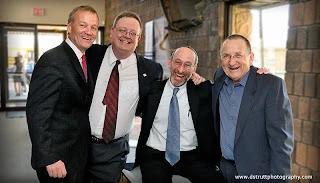
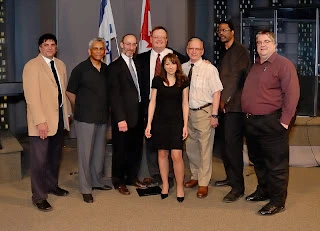
Weinstain, Mansur, Hausman, Vandermaas, Ambrogio, Campbell, Ovadyah, McHale

To view the complete agenda, including sponsors and contributors, go to:

http://israeltruthweek.wordpress.com/conference/

Approximately 65 people attended (including presenters, contributors and volunteers) from Toronto, Hamilton, Caledonia, Chatham, as well as London and the surrounding area.  Rabbi Hausman came from Massachusetts.

Laughton, Vandermaas, Hausman, Gretzky

There were sessions held in both the afternoon and evening, but I only attended the afternoon session.  Due to time limitations, I will only be summarizing the presentation by Vandermaas, with brief mention of Al Gretzky's.  In addition, I will include excerpts from an interview I conducted with Gary McHale at the end of the afternoon session.

Finally, I will be presenting highlights from my email exchange with Caledonia resident Bonnie Stephens after the conference (Stephens was a conference volunteer).  Stephens has participated in the rallies organized by the Caledonia activists, and, in fact, was one of the "Caledonia Eight" arrested on December 3, 2011.

Vandermaas's Presentation - "'Israel Truth Week' : born of Nazi-occupied Holland and the Caledonia crisis"

Some excerpts:
. . .It is difficult to convey the absolute terror, hopelessness, trauma and sense of betrayal the people of Caledonia feel to this day.  Perhaps it is enough to tell you that Pam Dudych must take medication and go to counseling; Pam's mother takes medication for her diagnosis of post traumatic stress disorder and has attempted suicide; Pam's father has had a heart attack; the family business is in ruins, and they cannot leave because they cannot sell their house.

. . .The first Jewish group to come and stand with us in Caledonia was the Never Again Group from Hamilton in 2011.  Actually they are 1/2 Jewish, 1/2 non-Jewish.  Last night they held their first anti-IAW event at McMaster University, which was a terrific success.  Many of them are here today and I am grateful for their support.

. . .[T]hose responsible for the violence in Caledonia have done their best for the past 6 years to deny the humanity of their victims by pretending they don't exist, all the while viciously attacking those of us who speak for them. . .

. . .[W]hat about the native leaders who recently met with the Iranian Ambassador in Ottawa?  One of them is Terrance Nelson who once said that the only way to deal with a white man is to pick up a gun and get between him and his money.  I wonder. . .what sort of aid from Iran were they looking for, do you think?

I hope you now better understand that when you help the fight for civil rights for non-Jews in Caledonia who are the innocent victims of a small group of native militants and the Ontario government that appeases them, you are also helping to defeat the sworn enemies of Israel trying to destroy everything you believe is right in your own backyard.

Al Gretzky - "Free Speech: Victim of Neutrality Between the Lawful and the Lawless"

Gretzky said that in terms of the rule of law, "it is impossible to have one without the other."  He provided the examples of Geert Wilders (in the Netherlands "a supposedly rule of law country"), and Tommy Robinson (in England "the cradle of our democracy") as two individuals who have had their free speech severely curtailed.  And he added that in Canada "we've got no reason to be smug, none whatsoever--just ask Mark Steyn and Ann Coulter."  He noted that what all these "supposed free countries" have in common is "growing civil unrest because of lack of freedom of speech and rule of law."

He referred to Saudi Arabia, Syria and Pakistan, to show what can happen when there is no rule of law.  He then spoke of Caledonia "where you can get arrested walking down the street with a Canadian flag--just ask Mark [Vandermaas] and Gary [McHale]."  Gretsky went down to Caledonia in June 2011 and said to Vandermaas on the way back "I didn't think I was in Canada.  I could not believe what was going on.  And that's because we refuse to stand up for the rule of law."

Gary McHale - Interview with counterpoise
counterpoise:  . . .People are so afraid of giving up their security. . .but I think what you've been able to prove is that the more you stick up for what you believe, it can come back and benefit you.

McHale:  It can.  I rarely talk about my Christian faith in interviews because I don't believe the modern media is going to represent my views properly.  And though it motivates me to do what I do, it is not really part of the issue in the sense that. . .I believe fundamentally most Canadians believe in freedoms.

. . .I didn't become a Christian until I was 21, and that was a very hard thing to do in my family.  It created major problems within the family.  But as I've been a Christian now for 30 years, there comes a time for most Christians when they say "what am I prepared to do, to take a stand for what I believe in.". . .As a Christian, I have to understand that if I'm going to take a stand, my money could be touched, my reputation could be touched, my health could be touched.

. . .[As Christians,] we believe that peaceful ways can overcome, that truth can overcome the hatred and the anger.  And I had to see whether or not I could put that in practice. . .My wife and I had to sit down and say "this is dangerous."  The bank foreclosed on our condo, we lost our entire investment in the condo--that's a hard decision--and at each level of time, we could say we're going to give up the fight and go back to our stable lifestyle. . .Ultimately as a person, I could do that quite easily; as a Christian, I couldn't do that. . .I had to make the decision where am I really going to stand.

. . .It's not a decision you make day one. . .it's kind of like a progression.  First thing I did was I wanted to set up a website, put some photos up.  And suddenly I was the object of everyone's hate.  But the darkest hours come when the people you are fighting for are equally the ones that are spitting in your face. . .[A]bout a year into the occupation, the residents [were] so tired of the occupation, so tired of the violence, so tired of the intimidation. . .that they [lashed] out at anyone they [perceived] might be agitating the situation.  All they [wanted was] everyone to go away, including that Gary McHale. . .So the very people who first support you, abandon you, and that's when you really know whether you're going to fight the battle.

This is why this [the conference] is so great.  [I]t has taken so long for us to get groups to come together.  And to get the media on board, that is so important. . .We're almost at the promised land, the way I'm seeing it now.  Back then it was the dark ages when everyone abandoned us. . .Then Mark steps forward. . .Merlyn Kinrade. . .These people have stood with us and they're equally to be credited.  I get so much credit for all the things Mark does.  He's the silent guy behind the scenes. . .We understand as a group, that when you give credit to the leader, it helps the overall cause. . .But a lot of these people work so much in the background.
Bonnie Stephens, Caledonia Resident and Conference Volunteer

Stephens, Christine McHale, Debbie Vandermaas

Excerpts from Stephens's emails to me, March 22 to 27, 2012:
. . .I was not at the early rallies in Caledonia when Gary, Mark. . .and others stood up for the rule of law, but rather, I am a product of their brave initiative.  [When trouble first broke out at Caledonia, the people I know there] were too confused and afraid to know what to do. . .People I know were shocked because the OPP were not stopping the criminal actions. . .Personally, I didn't know what to make of the OPP not stepping in.  I thought they must be organizing a giant operation to arrest the bad guys, but they didn't. . .I do think that some people - both in Caledonia and on Six Nations - were likely afraid of what more these thugs might do.  And angry.

. . .[I read Christie Blatchford's book about the Caledonia crisis, Helpless (2010)], and was thankful that she had written it. . .[I was disgusted when her] first speaking engagement at the University of Waterloo [was cancelled, November 10, 2010, due to a protest by a small group of students].  I wrote a letter to the president of the university about it.  I did attend the second time to add my support for Christie [the presentation was rescheduled for December 7, 2010, and went ahead smoothly].

There is a lot of "racist, racist, racist" chanted at us [at the rallies organized by the Caledonia activists] which is disgusting to me. . .I support what Gary is trying to do, so when they accuse him of something then they are accusing me of the same thing.  I refer you to CanaceHD for specific examples.

. . .Israel Truth Week showed me the macro and micro views of antisemitism; that it is growing worldwide and in Canada and that IAW in our universities is a result of this trend.  The speakers told us practical ways that each of us can combat antisemitism. . .So adding in this new information, the connection becomes clearer to me.  When violence and intimidation broke out at Caledonia and some residents needed protection. . .the police failed to protect them.  On campus (and elsewhere. . .) the people in authority fail to protect students being harmed in the same, albeit less violent, way.
Afterthoughts

In June 2007, I first contacted Vandermaas and McHale to lend my support.  And in September 2007, I also started corresponding with Jeff Parkinson who does the great videography work on CanaceHD.  I have lost some friendships and acquaintances because of my association with these people.  But fortunately I have gained others.  As Stephens said "I think anyone who speaks out about what is occurring in Caledonia is brave and valuable for shining light on what is happening here."  Vandermaas, Gretzky, McHale and Stephens are certainly far braver than me.  But I think McHale is right that the conference means "we're almost at the promised land."  I vividly recall the "dark ages" when the activists had little to no backing from the general public and the media.  But a growing number of people are joining the fight to preserve Canada's freedom of speech and rule of law.  We all need to join this fight, not just for ourselves, but for future generations.

[Check in the right sidebar for links to many of the organizations and/or resources mentioned in this post.]

Wednesday, 22 February 2012

Part Two of Two - A Delectable Lie, a Tree and a Way Forward: Multiculturalism and Aboriginal Policy Compared

As mentioned in part one, I see similarities between Salim Mansur's concerns about multiculturalism (as expressed in his book Delectable Lie) and my concerns about some aspects of current aboriginal policy in Canada.

In both cases, the government enacted legislation in order to gain support from the immigrant and aboriginal communities.  The officials involved wanted to appease those who felt Quebec was getting preferential treatment in constitutional discussions, e.g., those who believed Canada was more than two founding nations.  In addition, politicians wanted to get all sides on board so that constitutional negotiations could be finalized.

The evolutionary climate of the last 40 years of the 20th century gave legislators the idea that it was OK to tinker with liberalism so that societal changes could be accommodated.  But Mansur feels that caving in to the demands of special interest groups results in a weakening of the small l liberalism that is important for maintaining freedom and individual rights in a democratic society.

In fact, it is not just small l liberalism that is at stake, but the security of the country.  There are increasing reports that Islamist and/or pro-Palestinian/anti-Jewish forces are involved with aboriginal protests.

Pro-Palestinian/Anti-Jewish Groups and the Six Nations Occupiers at Caledonia

One of the most glaring examples of this is the nearly six-year occupation by Six Nations militants of the former Douglas Creek Estates (DCE) at Caledonia, Ontario.  You can read my "David Peterson and the Caledonia Crisis" post for more information about this crisis.

Caledonia activist Gary McHale said "when the occupation of DCE first started five Palestinian groups helped finance the occupation, and a Palestinian flag was raised on DCE. . .Since then anti-Israel protesters were seen at DCE. . .At McMaster [University] the same protesters on DCE are organizing Six Nations/Palestinian struggle events."

You can read McHale's February 1, 2012 article about this at the following link.

As McHale explains in the article, some members of the Jewish community have been following this issue with deep concern.  In fact, representatives of the Hamilton-based Never Again Group, which defends Israel and fights anti-Semitism, have been present at events organized by the Caledonia activists.

"Ending Race-Based Policing:  The Caledonia Act"

On February 9, 2012, Toby Barrett, the MPP for Haldimand County (which includes Caledonia), provided the Queen's Park Media Studio for the following people to make presentations about the topic "Ending Race-Based Policing:  The Caledonia Act."

1.   Gary McHale, Canadian Advocates for Charter Equality (CANACE)
2.   Stuart Laughton, Never Again Group
3.   Mary Lou Ambrogio, International Free Press Society-Canada vice-president
4.   Kristin Kaye, Caledonia-based Regional News reporter

You can find out more about the event and presentations at the following links on Mark Vandermaas's Voice of Canada website:

http://voiceofcanada.wordpress.com/2012/02/13/queens-park-news-conference-ngos-stand-with-caledonia-activists-for-release-of-caledonia-act-recommendations/

http://voiceofcanada.wordpress.com/2012/02/13/stuart-laughton-never-again-group-speech-at-caledonia-act-news-conference-individuals-are-the-ultimate-minorities/

http://voiceofcanada.wordpress.com/2012/02/13/mary-lou-ambrogio-international-free-press-society-connects-the-dots-wspeech-at-queens-park-caledonia-act-news-conference/

As Laughton says:
I want to stress that my group has made no opposition to the Natives who make land claims: we only protest the violent manner in which the claims to the Caledonia property were made and the racially skewed responses of the Ontario government. . .Will our next premier instruct police not to enter predominantly Muslim areas of our major cities, and allow microstates governed by Islamic Sharia law to flourish there? . .We also have to consider the effect that racially biased policing has on those Native Canadians, Tamils, Muslims, and others who ask for no special favours and want nothing to do with the more militant members of their community.  Who speaks for them? . .Our citizenry consists of millions and millions and millions of individuals and those INDIVIDUALS are the ultimate minorities.  Each of us has to be treated impartially before the law.
I completely agree with Laughton.  I am generally very supportive of the need by aboriginals to lobby for their rights, and to receive just compensation with regards to property, social justice, and other issues of concern.  But the events at Caledonia, in particular, have made me realize that the process of aboriginals lobbying for their rights can easily get sidetracked by those, like pro-Palestinian/anti-Jewish forces, who have an agenda that may not be in keeping with what all the people at Six Nations want.

Furthermore, what about the third of aboriginals who do not identify themselves as such in the federal census?  Do they share the views of the Six Nations occupiers and their supporters?  See my "Canadian Aboriginal Integration is Better than Assimilation or Parallelism" post for more information about this, and some related information.

Protecting the Rights of Individuals

One of the tests Mansur recommends for determining if a culture is of equal merit and deserves equal respect, is to see how the culture protects individuals (you can find a discussion of this in part one).  The bottom line is, how well is the Ontario government upholding the rights of the Caledonia residents, and, indeed, the rights of the Six Nations residents who are not participating in the occupation?

"Caring Measures" More Important than Attaining "Stratospheric Rights"

Australian anthropologist and linguist, Peter Sutton, has more than 40 years experience with the Aborigines in Australia.  His book, The Politics of Suffering: Indigenous Australia and the end of the liberal consensus (2009, 2011), is filled with many insights that I share.  Marcia Langton, the Aborigine scholar who penned a foreword for the book, also echoes his concerns.

Sutton complains that too many politicians, lawyers, and activists insist that Aborigines will not be truly happy and fulfilled until all outstanding issues, such as social justice, treaty and reconciliation, have been met.  He responds with ". . .[t]his unscientific mumbo jumbo beggars belief. . .Caring measures. . .rather than documentary measures based on increasingly stratospheric rights. . .lie at the effective end of realistic processes of improvement."

I do not know if Sutton is aware of the Caledonia situation, or if he has read and agrees with the concerns expressed in Mansur's book, Delectable Lie.  Therefore, I do not want to imply that he shares the opinions expressed in this post.  His words, nevertheless, resonate with me in terms of what I see is wrong, not only at Caledonia, but also what I often find is counterproductive regarding aboriginal policy development.

"Caring Measures" We Can Learn from the Six Nations Occupiers' Dog

CANACE videographer, Jeff Parkinson, took this footage, entitled "CANACE attacked on DCE," at a February 18, 2012 hostile encounter between the Six Nations occupiers and non-native residents who were objecting to the occupation.

http://www.youtube.com/CanacehD

As you can see, there was a lot of swearing and shouting and violence.

But photographer David Strutt was there, and was able to capture a more positive moment.

http://voiceofcanada.wordpress.com/2012/02/22/david-strutt-photos-capture-caledonia-8-history-on-douglas-creek-estates-in-caledonia/

This was when the Six Nations occupiers' dog welcomed Gary McHale.  Vandermaas said: "[f]or this one moment all the hostility evaporated.  David saw that the dog didn't understand hate; it didn't judge us [Caledonia activists] by the DNA running in our blood beneath our white skin.  It just saw a friend.  And David saw hope."

I think this dog can teach us all a few things about hope--and "caring measures."

A Way Forward

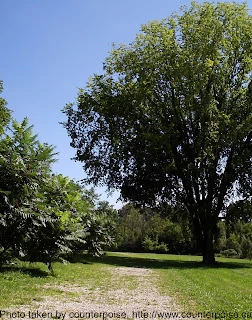
Here is a photo I took last summer, of a path in a park near my home:


It reminds me of the fact there is always a chance we will pull ourselves out of this mess, that we will find a way forward to a more peaceful solution.

Monday, 4 April 2011

David Peterson and the Caledonia Crisis

As a follower of Caledonia Wake Up Call, Jeff Parkinson, Voice of Canada, International Free Press Society – Canada (IFPS-Canada) and related websites, I know about the “No More Nightmares” event, which was sponsored by the Free Thinking Film Society and IFPS-Canada.  It was held on March 22, 2011 at the Library and Archives Canada building in Ottawa.  The event included presentations by Caledonia residents and activists who are concerned about the breakdown in the rule of law in this Southwestern Ontario community.  I would like to comment on two of the presentations that mention the central topic of my post:  David Peterson. 

Marie Trainer was the mayor of Haldimand County (which includes Caledonia) from November 2003 to October 2010.  She was therefore in this position on February 28, 2006 when Six Nations protesters first occupied what was then the Douglas Creek Estates.  She says that during the height of the confrontations between the protesters and Caledonia residents, the following activities took place:

Digging up a main road in Caledonia; burning tires in the middle of a main street; throwing a van over the bridge onto the road below; burning down a bridge in the middle of Caledonia; running over a police officer; taking another 2 police officers hostage; beating up and permanently injuring a developer; holding a former premier hostage for several hours; making residents who live in the area show passports issued by protesters. . . .

The “former premier” referred to is David Peterson, who was Ontario premier from 1985 to 1990.  Peterson was also the “provincial lead” negotiator for the Ontario government during the Caledonia crisis, April 29 to June 5, 2006.  During this period he held 13 meetings with Six Nations and other “stakeholders.”  These meetings led to the May 23, 2006 removal of the barricades that had been placed on Argyle Street.

Although many saw the removal of the barricades as a positive step, people on the Sixth Line of Caledonia knew that the crisis was far from over.  Some of these residents expressed concerns about the deals that Ontario government officials had made with the protesters in order to secure the removal.  One of these deals was to not have Ontario Provincial Police (OPP) policing on the Sixth Line from April 20, 2006 onwards.  In fact, policing was not restored until around March 2010.

One of the Sixth Line residents who spoke out about the problems was a teenager named Pam Dudych.  The Ottawa event included a video that was filmed on April 17, 2007, when Dudych attended a Queen's Park rally organized by Caledonia activists, including Gary McHale, Merlyn Kinrade, Jeff Parkinson and Mark Vandermaas.  At the end of Dudych’s presentation, she says:

People on the 6th line have not had a good night’s sleep for over a year now!!! That’s sad!  This is why we need your help!  I’m 14 years old and I will fight with as much power as I have to get police and justice back on my road!  I know Mr. Peterson made the mistake of taking it away and it’s sad when he can’t fix his own mistakes and that I am, a 14 year old girl trying!

Obviously Dudych felt that Peterson played a role in her distress.  I don’t know enough about the goings on behind the scenes to say what role exactly Peterson may have taken in the removal of policing, but certainly Dudych was not alone in feeling he was at least partly responsible.

On March 31, 2011, I had a telephone conversation with Marie Trainer, and she said she thought there was media coverage of Peterson being taken hostage by the protesters.  She said it occurred on Argyle Street South before the barricades were taken down.  I have not been able to find the media coverage for this, so if any readers of this post can fill me in, please do so.  However, I do not think it’s surprising that this could have occurred since Peterson himself reportedly described one particularly wrenching time in the conflict as, “the day the Devil threw a party and everybody came.”

Although I have had many positive experiences with aboriginals, I have also been intimidated and harassed by some of them for what I consider to be completely unfounded reasons—I was used as a sacrificial lamb.  Therefore, I can well imagine it must have been very upsetting for Peterson to be held hostage for hours.  Did this incident contribute to his making concessions to the protesters that maybe he should not have made?

I am old enough to remember Peterson’s often less than successful relations with aboriginals during his term as premier.  He alienated various native groups across Ontario, particularly when they concluded that he had failed to live up to promises he had made to them regarding the Meech Lake Accord.  In fact, in June 1990, one aboriginal leader said Peterson had betrayed the country’s native people.  Mind you, aboriginal issues were a contentious matter throughout most of Peterson’s tenure, e.g., the Oka crisis.  Nevertheless, it seems to me that Peterson has gone from alienating the aboriginals when he was premier, to being overly accommodating when he was involved with the 2006 Caledonia negotiations.  He has been quoted several times as saying he views the Caledonia situation as “heartbreaking.”  But saying it’s heartbreaking is not good enough for me.

Some people have accused the Caledonia activists of stirring up trouble because they have asked for apologies from Six Nations, the OPP and the Ontario government.  But I completely agree these apologies are needed.  For years I tried to set up a healing circle regarding the harassment and intimidation I experienced, and was astounded by the runaround I got.  Although some aboriginals showed concern about what happened to me, they still would not follow through and help me bring about this healing circle.  I can personally identify with the distress being experienced by many Caledonia residents because they have not experienced the closure they deserve. 

This lack of accountability contributes to a breakdown in trust that does not help either the people of Caledonia or Six Nations to move forward.  The bottom line is, if there are no official apologies, then who’s to say it won’t happen again?  I advise all federal, provincial and municipal officials to bear this in mind the next time they are at the negotiating table.

• Helpless by Blatchford.  ‘No More Nightmares.’

• International Free Press Society – Canada.  Caledonia:  No More Nightmares.

• Ontario Ministry of Aboriginal Affairs.  Land Claims/Haudenosaunee/Six Nations  Haldimand Tract Negotiations.  Background. 

• Voice of Canada.  Caledonia’s Youngest Hero:  14 year old Pam ‘Dancer’ Dudych.

• Jeff Parkinson.  Featured Video:  Pam ‘Dancer’ Dudych at Queen’s Park.